

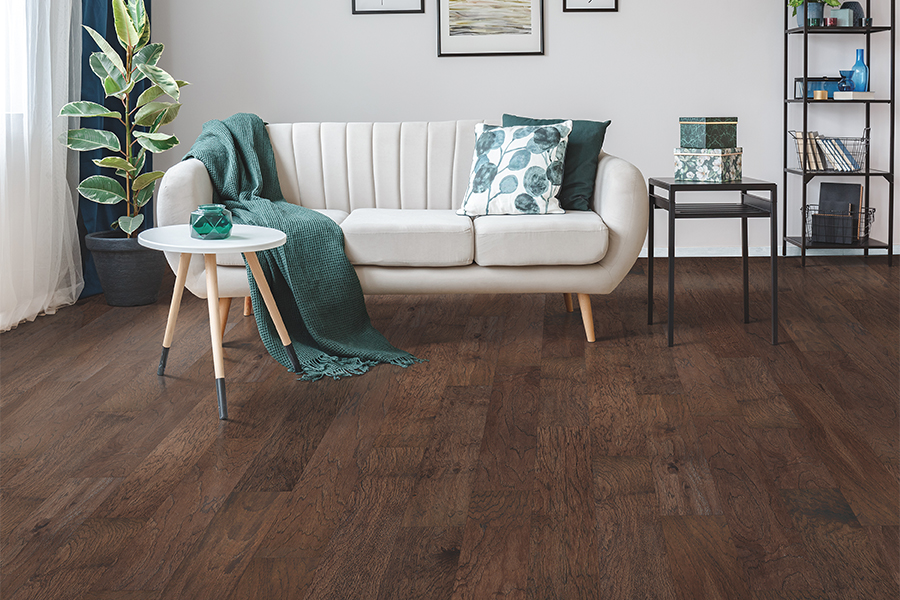
Choosing hardwood flooring involves more than selecting a wood species or plank width. Color plays a powerful role in shaping how a space looks and feels. It influences brightness, perceived size, mood, and even how architectural details stand out. In modern and high-end interiors, the tone of your hardwood flooring becomes an essential design element rather than a simple finishing touch.
Some homeowners are drawn to the dramatic richness of dark hardwood floors. Others prefer the airy openness that lighter tones provide. Both options can be luxurious, sophisticated, and timeless when thoughtfully selected. The key is understanding how each color interacts with your space, your lifestyle, and your overall design goals.
Let’s compare light and dark hardwood flooring so you can make a confident, informed decision.
What makes dark wood flooring so appealing?
Dark hardwood flooring makes a strong visual statement. It feels grounded, refined, and undeniably elegant. In contemporary and luxury interiors, darker tones often serve as the foundation that anchors the entire design.
Many clients choose darker hardwood for the following reasons:
Rich, dramatic aesthetics: Dark flooring adds depth and visual intensity to a room. It works beautifully with modern architecture, bold furnishings, and clean, minimalist lines. In high-end residential and commercial settings, darker tones communicate intentional design and sophistication.
Strong visual contrast: Light-colored walls, expansive windows, and streamlined furniture stand out more clearly against a dark floor. This contrast is a signature element in contemporary design because it creates balance and visual structure.
Timeless luxury appeal: Deep tones such as espresso, walnut, and charcoal convey formality and refinement. These colors are often used in upscale homes, executive offices, and premium commercial environments because they project a sense of permanence and prestige.
Defines large open spaces: In expansive layouts, darker wood flooring helps create visual boundaries and warmth. It prevents large rooms from feeling empty or undefined by adding weight and cohesion.
Hides wood grain variation: Dark stains often soften the appearance of natural grain variation. This can create a smoother, more uniform surface that feels polished and carefully curated.
While dark wood flooring offers striking beauty, it also comes with practical considerations.
Dust and light debris show more easily: Light-colored dust, lint, and pet hair tend to be more visible on darker surfaces. Routine cleaning helps maintain a pristine appearance.
Scratches may be more noticeable: Depending on the finish and wood species, surface wear can contrast more visibly against a dark stain. Choosing a durable finish helps reduce this concern.
Rooms may feel more enclosed without balance: In smaller rooms or spaces with limited natural light, dark hardwood flooring can feel visually heavy. Thoughtful lighting, lighter wall colors, and reflective materials can help maintain balance.
Why do many homeowners prefer light wood flooring?
Light hardwood flooring creates a very different atmosphere. It feels open, fresh, and welcoming. Instead of absorbing light, it reflects it, which transforms how a room is experienced.
Many homeowners and designers choose lighter tones for these reasons:
Makes spaces feel larger and brighter: Light floors reflect both natural and artificial light, helping rooms feel more expansive and inviting. This is especially helpful in compact spaces or areas with limited windows.
Showcases natural wood character: Lighter finishes often highlight grain patterns, knots, and texture. These details add warmth and visual interest, creating an organic and natural appearance.
Hides dust and minor scratches better: Everyday wear tends to blend more easily into lighter tones. This makes them a practical choice for active households and busy commercial environments.
Versatile design compatibility: Light hardwood pairs effortlessly with modern, Scandinavian, minimalist, and transitional design styles. It supports layered textures, neutral palettes, and evolving décor choices.
Creates a relaxed luxury feel: While darker wood floors often feel formal and dramatic, lighter wood floors create a calm and serene atmosphere. They deliver sophistication while maintaining comfort and approachability.
Light hardwood flooring also has a few considerations to keep in mind.
Less dramatic visual impact: If you want bold contrast or strong architectural definition, lighter wood flooring may feel more subtle unless paired with darker furnishings or accents.
Can show dark debris more easily: Darker dirt or spills may stand out more clearly on pale surfaces, depending on the specific tone and finish.
May feel less formal in certain settings: Highly traditional or ultra-formal interiors may require additional design elements to achieve a formal look when lighter flooring is used.
Which hardwood flooring color is better for modern and luxury design?
Both dark and light wood floors can be exceptional in modern and luxury spaces. The outcome depends on how the flooring works with the surrounding design elements.
Contemporary interiors often rely on contrast and balance. Dark hardwood floors paired with light walls and expansive windows create bold architectural drama. Light hardwood floors paired with clean lines and layered textures create refined simplicity and openness.
Luxury design is not defined by darkness or lightness alone. It is defined by intentional choices that support the overall experience of the space.
Consider the following design strategies:
Choose dark wood flooring if you want:
Bold architectural contrast
A dramatic focal point
Strong visual grounding in large spaces
Formal or statement-driven interiors
Choose light wood flooring if you want:
Openness and brightness
A calm, serene environment
Natural, organic texture
Flexible styling across evolving design trends
Commercial environments benefit from this same approach. Dark flooring can establish authority and sophistication in executive settings or upscale retail spaces. Light flooring can encourage openness and flow in collaborative offices, wellness spaces, and contemporary hospitality environments.
How should lighting and room size influence your flooring choice?
Lighting dramatically affects how the flooring color appears in a space. A tone that looks perfect in a showroom may feel completely different once installed in your environment.
Rooms with abundant natural light can support darker flooring without feeling heavy. Spaces with limited daylight often benefit from lighter tones that help maximize brightness.
Room size also plays an important role. Smaller rooms typically feel more spacious with light flooring, while large open layouts often benefit from darker tones that provide warmth and structure.
Artificial lighting also influences the final result. Layered lighting can soften dark flooring or enhance the natural glow of lighter wood. The goal is to create visual harmony rather than relying on contrast alone.
What is the best hardwood floor color for resale value?
Neutral and timeless tones generally appeal to the broadest range of buyers. Both dark and light flooring can support strong resale value when the installation is high quality, and the color complements the home’s overall design.
Current trends often favor natural and mid-tone finishes because they feel adaptable and contemporary. Extremely dark or extremely pale finishes may appeal to more specific design preferences depending on the market.
Ultimately, cohesive design matters most. Flooring that integrates seamlessly with architecture, lighting, and interior finishes will always be the most appealing.
How do you decide between dark and light hardwood flooring?
Begin by evaluating your space rather than focusing only on personal preference. Consider natural light, room size, ceiling height, and how the space will be used. Think about the atmosphere you want to create. Some spaces benefit from drama and contrast, while others thrive on openness and calm.
You should also consider maintenance expectations and daily activity levels. Flooring should support your lifestyle and remain beautiful with regular use.
Most importantly, think about the overall design vision. Flooring connects walls, furniture, lighting, and architectural features into a cohesive whole.
Your home for premium hardwood floors in Seattle, WA
Dark and light hardwood flooring can both deliver exceptional results. The best choice is the one that supports your space, aligns with your design goals, and creates the experience you want to achieve.
If you are ready to explore premium hardwood flooring for your next project, Associated Incorporated is here to guide you through every step. Our wood flooring store in Seattle, WA, serves Seattle, WA, Bellevue, WA, Tacoma, WA, Olympia, WA, and Bremerton, WA. Call today!


